How to stop shaking when nervous
How to stop shaking when nervous: breathe out slowly and for longer than you breathe in, move your body to burn off the adrenaline, and give your hands something steady to hold. The shaking is your fight-or-flight response, and it settles as your breathing and heart rate come down.
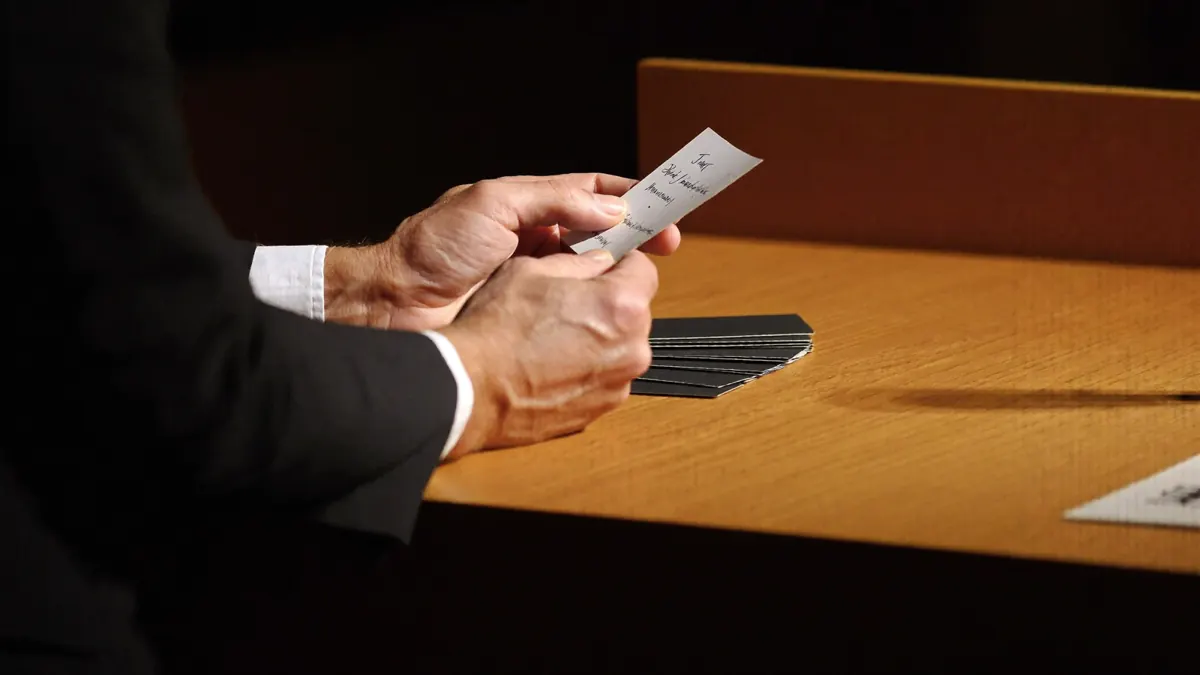
Long exhales, a short brisk walk, loose shoulders and busy hands. For speaking, hold note cards instead of a sheet and rest your hands on the lectern between gestures.
Why you shake when you're nervous
Under pressure your body switches into fight-or-flight. Adrenaline rushes through it and tells it to speed up its movements; your heart pounds and your hands and legs can start to shake (Stand Up, Speak Out). The NHS lists trembling or shaking among the physical signs of panic, next to a racing heartbeat, sweating and fast breathing. It is a normal stress response, not a sign that something is wrong with you, and it fades as the adrenaline wears off.
How to stop shaking when nervous, right now
Breathe out longer than you breathe in
Slow, deep breaths slow your heart rate and have a calming effect (American School Counselor Association), and deep breathing helps counteract excess adrenaline (Stand Up, Speak Out). Try a cyclic sigh: breathe in, take a second short breath in, then exhale slowly. In a trial this exhale-focused pattern improved mood more than mindfulness meditation (Balban et al., 2023).
Move
A brisk walk, a flight of stairs or shaking out your arms gives the restless energy somewhere to go. Physical movement channels some of the excess energy your body produces in response to anxiety (Stand Up, Speak Out).
Drop your shoulders
Right before you start, relax the muscles of your neck and shoulders (Stand Up, Speak Out). Tense, then let go. A tight upper body makes a tremor stronger.
Give your hands a job
Hold a pen, a clicker or a cup with both hands, or press your palms together for a few seconds. Hands held still in mid-air show a tremor most.
Plant your feet
If your legs shake, stand with your weight on both feet and press them into the floor. Shifting from foot to foot keeps the shake going.
How to stop shaking when nervous before a speech
Shaking hands are one of the most common signs of stage fright. AmberWillo's guide to shaking hands notes that even confident speakers shake, because anxiety raises adrenaline. Here is how to stop shaking when nervous in front of an audience:
- Cards, not a sheet. Note cards don't quiver like paper, and they give your hands something to do (Stand Up, Speak Out).
- Rest your hands on the lectern between gestures, and use a few planned gestures for emphasis instead of holding your hands up the whole time.
- Know your first line cold. The shaking is usually worst in the first minute and fades once you are talking.
- Don't announce it. Audiences do not perceive the level of nervousness that speakers report feeling (Stand Up, Speak Out).
For the minute before you start, use the 60-second calming routine.
Make the shaking happen less often
Knowing how to stop shaking when nervous helps on the day. Shaking less often takes a few habits. The NHS suggests regular exercise, regular meals to keep your energy steady, calming breathing exercises, and not using alcohol, cigarettes or drugs to relieve anxiety. Butterflies are more noticeable if you skip meals (Stand Up, Speak Out), so eat something light before a big moment. Most of all, don't avoid the situations that make you shake: the NHS advises building up time in them slowly. The same advice sits at the heart of how to get over fear of public speaking.
When to see a doctor
If shaking is strong enough that you avoid work, classes or social plans, or it happens without any stressful trigger, talk to a doctor. Beta blockers are one option a doctor may discuss for performance anxiety; propranolol is used to help with symptoms of anxiety (NHS). Don't take someone else's tablets to find out.
General information, not a diagnosis. If fear keeps you from work, school or daily life, talk to a doctor or a therapist.
Questions readers ask
Why do my legs shake when I'm nervous?
For the same reason your hands do: adrenaline tells your body to speed up its movements, and hands and legs can start to shake (Stand Up, Speak Out). Plant both feet and breathe out slowly.
Will people notice that I'm shaking?
Far less than you think. Audiences do not perceive the level of nervousness speakers report feeling (Stand Up, Speak Out), and resting hands hide most of a tremor.
How long does nervous shaking last?
Usually only while the adrenaline is high. Once you are breathing slowly and doing something, it tends to fade within minutes. If it doesn't, or it comes without a trigger, see a doctor.
Do beta blockers stop the shaking?
They are one option a doctor may discuss for performance anxiety; propranolol is used to help with symptoms of anxiety (NHS). Talk to a doctor rather than trying them on your own.
See how calm you look
Confidently shows how your face looks while you talk, plus a confidence score. Most people look steadier than they feel.
Practise out loud for freeFree on iPhone and Android
Sources
- What Is Communication Apprehension?, Stand Up, Speak Out (Saylor Academy open textbook)
- Reducing Communication Apprehension, Stand Up, Speak Out (Saylor Academy open textbook)
- Anxiety, fear and panic, NHS
- Coping With Student Anxiety, American School Counselor Association
- Brief structured respiration practices enhance mood and reduce physiological arousal (Balban et al., Cell Reports Medicine, 2023), PubMed Central
- Propranolol, NHS
- Why Do My Hands Shake When Public Speaking?, AmberWillo